Switching ERP systems isn’t just a tech upgrade—it’s a business transformation. With the right ERP migration services, companies unlock efficiency, scalability, and data clarity. But without a solid plan? It’s a costly risk. Let’s explore how to get it right.
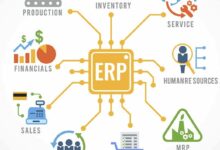
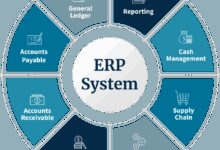

What Are ERP Migration Services and Why They Matter

Enterprise Resource Planning (ERP) migration services are specialized solutions that help organizations transition from legacy or outdated ERP systems to modern, integrated platforms. This process involves data transfer, system integration, user training, and post-migration support—all designed to ensure a seamless shift without disrupting daily operations.
As businesses grow and technology evolves, staying on an obsolete ERP system can hinder performance, security, and innovation. ERP migration services bridge that gap by offering expert guidance through every phase of the transition. Whether moving from on-premise to cloud-based ERP like Oracle ERP Cloud or upgrading from SAP ECC to S/4HANA, these services ensure minimal downtime and maximum ROI.
Defining ERP Migration in Modern Business
ERP migration refers to the complete process of transferring business-critical data, workflows, configurations, and integrations from one ERP environment to another. This could mean shifting from an older version of the same software or adopting a completely new platform.
The goal isn’t just data portability—it’s operational continuity. A successful ERP migration preserves historical records, maintains compliance, and aligns with current business processes while enabling future scalability. According to Gartner, ERP systems are central nervous systems for enterprises, making their migration a high-stakes endeavor.
Key Components of ERP Migration Services
Professional ERP migration services typically include several core components:
- Data Migration: Extracting, cleaning, mapping, and loading data from the old system to the new one.
- System Integration: Connecting the new ERP with existing tools like CRM, HRIS, or e-commerce platforms.
- Customization & Configuration: Tailoring the new ERP to match business workflows and user roles.
- User Training & Change Management: Preparing employees for the new system through workshops, documentation, and support.
- Testing & Validation: Running simulations and audits to verify data accuracy and system functionality.
- Post-Migration Support: Offering troubleshooting, optimization, and monitoring after go-live.
“A well-executed ERP migration doesn’t just move data—it transforms how a company operates.” — TechTarget, 2023
Common Triggers for ERP Migration
Organizations don’t migrate ERP systems on a whim. Several strategic and operational factors drive the decision:
- End of Support: Legacy systems like Microsoft Dynamics GP or SAP R/3 may no longer receive security patches or vendor support.
- Scalability Needs: Rapid growth demands a system that can handle increased transaction volumes and global operations.
- Cloud Adoption: Companies are shifting to cloud ERP for flexibility, lower infrastructure costs, and remote access.
- Poor User Experience: Outdated interfaces reduce productivity and increase training time.
- Integration Challenges: Inability to connect with modern tools like Power BI, Salesforce, or Shopify.
When these issues pile up, ERP migration services become not just beneficial—but essential.
The Top 7 Benefits of Professional ERP Migration Services
Investing in expert ERP migration services delivers tangible returns across departments. From finance to supply chain, the ripple effects of a smooth transition are profound. Let’s break down the seven most impactful benefits.
1. Minimized Downtime and Business Disruption
One of the biggest fears during ERP migration is operational paralysis. Professional services use phased rollouts, parallel testing, and rollback plans to keep systems running.
For example, a manufacturing firm using Infor ERP can migrate during off-peak hours or use a hybrid approach where both systems run temporarily. This ensures order processing, inventory tracking, and payroll continue uninterrupted.
2. Enhanced Data Accuracy and Integrity
Data is the lifeblood of any ERP system. Poor migration can lead to duplicates, missing records, or corrupted entries—costing time and trust.
ERP migration services employ data cleansing tools and validation scripts to ensure only high-quality data makes the jump. They also map fields accurately between old and new systems, preserving relationships and hierarchies.
A study by IBM found that poor data quality costs businesses an average of $12.9 million annually. With proper ERP migration services, companies drastically reduce this risk.
3. Faster Time-to-Value
DIY migrations often take months longer than expected due to unforeseen complications. Professional teams bring templates, accelerators, and battle-tested methodologies that speed up deployment.
Using pre-built migration kits for platforms like NetSuite or Microsoft Dynamics 365, consultants can cut implementation time by 30–50%. This means faster access to real-time reporting, automation, and analytics.
4. Improved Security and Compliance
During migration, data is especially vulnerable. Unsecured transfers or misconfigured permissions can expose sensitive financial or HR data.
ERP migration services implement encryption, role-based access controls, and audit trails throughout the process. They also ensure compliance with regulations like GDPR, HIPAA, or SOX, depending on the industry.
For healthcare providers or financial institutions, this isn’t optional—it’s mandatory. A certified migration partner will document every step for audit readiness.
5. Seamless Integration with Existing Systems
Modern ERP systems don’t operate in isolation. They must sync with CRM, e-commerce, HR, and BI tools.
ERP migration services include integration architecture design, API configuration, and middleware setup. For instance, migrating to SAP S/4HANA might require connecting to Salesforce via CPI (Cloud Platform Integration).
Without expert help, integration gaps can lead to manual workarounds, data silos, and reporting delays.
6. Future-Proofing Your Technology Stack
A good ERP migration isn’t just about today—it’s about tomorrow. Professional services assess long-term goals like AI adoption, IoT integration, or global expansion.
They recommend scalable cloud architectures, modular designs, and upgrade-friendly configurations. This prevents the need for another costly migration in just a few years.
For example, choosing a microservices-based ERP over a monolithic one allows easier feature additions down the line.
7. Stronger User Adoption and Training Support
Even the best ERP system fails if employees resist it. ERP migration services include change management strategies to ease the transition.
This includes role-based training, video tutorials, FAQs, and super-user programs. Some providers even offer post-go-live coaching to address real-time issues.
According to Prosci, organizations with strong change management are six times more likely to meet project objectives.
Common Challenges in ERP Migration and How Services Overcome Them
Despite the benefits, ERP migration is fraught with risks. However, experienced ERP migration services are built to anticipate and neutralize these challenges before they escalate.
Data Quality and Cleansing Issues
Legacy systems often accumulate years of inconsistent, redundant, or incomplete data. Migrating this “dirty” data directly leads to errors in the new system.
ERP migration services use data profiling tools to identify anomalies like duplicate customer records, missing product codes, or incorrect financial entries. They then clean, deduplicate, and standardize the data before migration.
For example, a retail chain with 10 years of sales data might discover that 15% of its inventory records are outdated. A professional service would flag and correct these before import.
System Compatibility and Integration Gaps
Older ERPs may use proprietary databases or outdated APIs that don’t speak the language of modern cloud platforms.
Migration experts use middleware like MuleSoft or Dell Boomi to bridge compatibility gaps. They also refactor legacy code or rebuild integrations using RESTful APIs or ETL (Extract, Transform, Load) pipelines.
In one case, a logistics company migrated from JD Edwards to Oracle Cloud ERP using a hybrid integration model, allowing gradual decommissioning of legacy modules.
User Resistance and Change Management
Employees often fear new systems will complicate their work or make them obsolete. This resistance can derail even technically perfect migrations.
ERP migration services include organizational change management (OCM) specialists who communicate benefits, involve stakeholders early, and provide hands-on training. They also identify champions within departments to advocate for the new system.
A phased rollout—starting with a pilot group—helps build confidence and gather feedback before full deployment.
Step-by-Step Guide to a Successful ERP Migration Using Professional Services
ERP migration isn’t a one-day event—it’s a multi-phase journey. Professional ERP migration services follow a structured methodology to ensure success at every stage.
Phase 1: Assessment and Planning
This initial phase sets the foundation. Consultants conduct a thorough audit of the current ERP system, business processes, data landscape, and integration points.
Key activities include:
- Stakeholder interviews to understand pain points and goals.
- Technical assessment of database health, customizations, and third-party add-ons.
- Defining migration scope: full migration, partial, or phased.
- Creating a detailed project plan with timelines, budgets, and risk mitigation strategies.
At this stage, the team also selects the target ERP platform—whether it’s moving to Workday, Oracle, or Microsoft Dynamics.
Phase 2: Data Preparation and Cleansing
Data is the most critical asset in ERP migration. This phase focuses on extracting data from the source system and preparing it for transfer.
Steps include:
- Data mapping: aligning fields between old and new systems (e.g., “Customer ID” to “Party Number”).
- Data cleansing: removing duplicates, correcting formats, filling missing values.
- Data validation: running test loads to check for errors or mismatches.
Tools like Informatica, Talend, or native ERP data importers are used to automate and verify the process.
Phase 3: System Configuration and Customization
The new ERP must reflect the company’s unique workflows. This phase involves setting up modules (finance, HR, supply chain), defining user roles, and configuring business rules.
Professional services ensure that customizations are minimal and upgrade-safe. They avoid deep code changes that could complicate future updates.
For example, a pharmaceutical company might need special compliance workflows for batch tracking, which the migration team configures using standard ERP features rather than custom scripts.
Phase 4: Integration and Testing
Once the system is configured, it must connect with other business applications. This phase builds and tests integrations with CRM, payroll, e-commerce, and BI tools.
Rigorous testing follows:
- Unit Testing: Checking individual functions like invoice creation.
- Integration Testing: Verifying data flow between ERP and external systems.
- User Acceptance Testing (UAT): Letting end-users validate the system against real-world scenarios.
- Performance Testing: Ensuring the system handles peak loads without slowdowns.
Any issues found are logged, prioritized, and resolved before go-live.
Phase 5: Go-Live and Post-Migration Support
The go-live moment is when the new ERP goes live and the old system is retired. This is often done during a weekend or low-activity period.
ERP migration services provide:
- Real-time monitoring during the switch.
- On-call support teams to handle emergencies.
- Post-migration audits to confirm data integrity and system stability.
In the weeks following, consultants offer hypercare support—intensive assistance to resolve any teething issues.
Choosing the Right ERP Migration Services Provider
Not all ERP migration services are created equal. Selecting the right partner can make the difference between success and failure.
Key Criteria for Evaluation
When vetting providers, consider:
- Industry Expertise: Do they have experience in your sector (e.g., manufacturing, healthcare, retail)?
- Platform Certifications: Are they certified partners of your target ERP vendor (e.g., SAP, Oracle, Microsoft)?
- Proven Methodology: Do they follow a structured, repeatable process?
- Client References: Can they provide case studies or testimonials?
- Support Model: What kind of post-migration assistance do they offer?
For example, a company moving to NetSuite should look for a NetSuite Solution Provider with SuiteCloud certification.
Red Flags to Watch Out For
Be cautious of providers who:
- Promise unrealistically short timelines.
- Downplay the need for data cleansing.
- Lack transparency about costs or risks.
- Have no documented change management strategy.
These are signs of inexperience or overconfidence that could jeopardize your project.
Top ERP Migration Service Providers in 2024
Several firms stand out for their expertise and global reach:
- Deloitte: Offers end-to-end ERP migration for SAP, Oracle, and Microsoft with strong change management.
- Accenture: Known for large-scale cloud migrations and AI-driven data transformation.
- IBM: Provides hybrid migration solutions and deep integration capabilities.
- Wipro: Specializes in cost-effective offshore migration support.
- Insight Enterprises: Focuses on mid-market companies with Microsoft and Oracle migrations.
Each has strengths depending on your size, budget, and complexity.
ERP Migration Services for Cloud vs. On-Premise Systems
The destination platform—cloud or on-premise—dramatically influences the migration approach. ERP migration services tailor their strategies accordingly.
Migrating to Cloud-Based ERP Systems
Cloud ERP adoption is surging due to scalability, lower TCO, and automatic updates. Migrating to platforms like Oracle Cloud ERP or SAP S/4HANA Cloud requires specific expertise.
ERP migration services for cloud focus on:
- Subscription model alignment.
- Multi-tenancy considerations.
- Identity and access management (IAM).
- Disaster recovery and SLA compliance.
They also help clients understand licensing models and avoid unexpected usage fees.
Migrating Between On-Premise Systems
Some organizations prefer to stay on-premise for control or compliance reasons. Migrating between on-premise ERPs (e.g., from PeopleSoft to Infor) involves physical infrastructure planning.
Services include:
- Server provisioning and database replication.
- Network configuration and firewall setup.
- Backup and recovery planning.
While more predictable, on-premise migrations require longer lead times and higher upfront investment.
Hybrid Migration Strategies
Many companies adopt a hybrid model—keeping some modules on-premise while moving others to the cloud.
ERP migration services design secure hybrid architectures using VPNs, API gateways, and data synchronization tools. This allows gradual transition without full disruption.
For example, a bank might keep core banking on-premise but move HR to Workday Cloud.
Future Trends Shaping ERP Migration Services
The landscape of ERP migration is evolving rapidly. Emerging technologies and business demands are reshaping how services are delivered.
AI and Machine Learning in Data Migration
AI is revolutionizing data mapping and cleansing. Tools powered by machine learning can automatically detect field relationships, suggest mappings, and flag anomalies.
For instance, AI can recognize that “CustID” in the old system corresponds to “Customer_Key” in the new one, reducing manual effort by up to 70%.
ERP migration services are increasingly embedding AI into their toolkits for faster, more accurate results.
Rise of Low-Code and No-Code Migration Tools
Vendors are releasing user-friendly platforms that allow non-technical staff to assist in migration.
Tools like Microsoft Power Automate or Oracle Data Integrator offer drag-and-drop interfaces for data workflows. While not a replacement for experts, they empower internal teams to participate.
Professional services now train clients on these tools for ongoing maintenance.
Increased Focus on Sustainability and Green IT
ERP migration is being evaluated through an environmental lens. Cloud migrations reduce energy consumption by eliminating on-site servers.
ERP migration services now include carbon footprint assessments and recommend energy-efficient architectures.
For example, moving from a data center to AWS can reduce CO2 emissions by up to 88%, according to a 2022 study by 451 Research.
What are ERP migration services?
ERP migration services are professional solutions that help organizations move from an old or outdated ERP system to a new platform. This includes data transfer, system configuration, integration, testing, and user training to ensure a smooth transition with minimal disruption.
How long does an ERP migration typically take?
The duration varies based on complexity, but most ERP migrations take 6 to 18 months. Simple cloud migrations may take 3–6 months, while large-scale, multi-module transitions can exceed a year.
Is it better to migrate ERP in-house or hire a service provider?
While some companies attempt in-house migration, hiring a professional ERP migration services provider reduces risk, speeds up deployment, ensures data integrity, and improves user adoption. The expertise and tools they bring often justify the investment.
Can ERP migration services help with cloud adoption?
Yes, most ERP migration services specialize in cloud transitions, helping businesses move from on-premise systems to cloud platforms like Oracle Cloud, SAP S/4HANA Cloud, or Microsoft Dynamics 365, with full support for security, integration, and compliance.
What happens to old data during ERP migration?
Old data is extracted, cleaned, validated, and mapped to the new system. Unnecessary or obsolete data can be archived or retired. Professional services ensure historical data is preserved accurately and securely.
ERP migration services are no longer a luxury—they’re a strategic necessity. As businesses face digital transformation, regulatory demands, and competitive pressures, the ability to evolve their ERP systems efficiently is critical. From minimizing downtime to ensuring data integrity and driving user adoption, professional services provide the expertise and structure needed for success. Whether moving to the cloud, upgrading legacy systems, or integrating new technologies, the right ERP migration partner can turn a high-risk project into a powerful growth enabler. The future of ERP is agile, intelligent, and interconnected—and with the right migration strategy, your business can lead the way.
Further Reading:
